
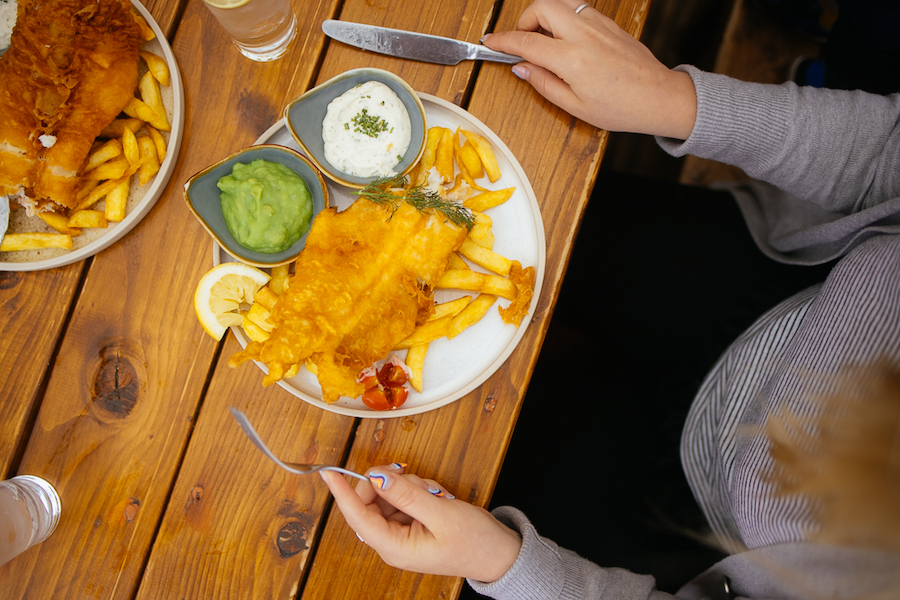
The news that fish species such as hake and coley are off the menu and on the naughty list will have many chefs reaching for the recipe books in despair. Long promoted as more sustainable alternative to cod and haddock, the Marine Conservation Society (MCS) has just downgraded European hake from green to amber, and UK-caught Coley to red, due to concerns about overfishing.
Fish and seafood is perennially popular on menus. Classics such as fish and chips and fish pie fall into the comfort food category, while lighter dishes featuring grilled or steamed fish are perceived as healthier and can appeal to customers on weight loss regimes.
Even so, and despite competition from everything from wars to the threat of record El Nino weather devastation, the sustainability of the ocean’s resources remains one of the biggest challenges in term of threats to the smooth running of the global supply chain.
Although it’s a few years since The Blue Planet documentary put over-fishing at the forefront of public concern, the issues remain. In its most recent annual report, the Marine Stewardship Council (MSC) said that “in an era of rapidly warming oceans, geopolitical upheaval and a retreat from globalisation and international cooperation, our ocean is under unprecedented strain”.
Practically, one piece of advice often given to chefs is to broaden the range of varieties of fish and seafood used on menu, and in particular to go beyond the ‘big five species’ that make up about 80% of the fish eaten in the UK – cod, haddock, salmon, tuna and prawns.
However, it can sometimes feel like this is easier said than done. There are good reasons why the big five fish are widely used on menus. Not only do they feature in many popular dishes, such as prawn cocktail, smoked salmon and, of course, fish and chips, but they are straightforward to prepare and easy to source ready-portioned in both fresh and frozen format.
Asking a busy kitchen to work with a less familiar species raises issues around skills, costs and efficiency. Fish can be a costly product to source, and at its most basic, sourcing a premium product that takes longer to prepare, with relatively high levels of wastage, can be difficult to justify.
Another challenge is that, as with the new warnings about hake and coley, the MSC advice on sustainability changes regularly. The MSC rates fish and seafood by a colour coded system which ranges from 1, indicating Best Choice / Green, to 5 warning of Fish to Avoid / Red. Another example is North East Atlantic mackerel. Previously promoted as a more sustainable menu option, this year’s Good Fish Guide saw it given a red rating, again because of concerns about overfishing.
The blue MSC label on seafood, often called the blue tick, means the product is wild-caught fish using fishing practices that have been independently assessed as meeting the MSC’s requirements for environmental sustainability. When buying catering products, the blue tick may not be on standard packaging, but the blue status should be indicated online and in printed catalogues and price lists. The Aquaculture Stewardship Council (ASC) issues a green certification label or mark for farmed seafood products
Suppliers can help navigate the complexity. A specialist seafood supplier can advise on the MSC rating of the products they supply, and recommend alternatives as availability changes. In addition:
- For chefs working with unfamiliar fish, it’s important to understand yields when planning dishes and calculating margins. Typically, anything from 20% up to 60% or more can be lost when filleting, depending on the fish species. When buying a whole fish by weight, the yield will be lower than the weight of the fish. Suppliers can advise on the amount you can realistically expect to sell when ordering different fish.
- Unless you have the skills in the kitchen, it may make more sense to pay your fish supplier to prepare fillets, and to know that all the fish being purchased can be sold to customers.
- The trim from a fish fillet is high quality protein that can be used to make popular dishes such as fish pie or fishcakes. By working with your fish supplier to make the most of these ‘extras’ you get the maximum yield
Operators can also help encourage customers to enjoy a wider range of species:
- Offer a special seafood menu or a regular special, including starters and light bite options;
- Host a dedicated night of the week or month focusing on seafood dishes;
- Offer promotions such as a seafood dish and glass of wine for a set price;
- Include description of the flavour and texture of different species on menus to encourage customers to try them. Suppliers can provide this information;
- Capitalise on the popularity of spicy flavours by using a less familiar species in dishes such as fish curry and Thai fishcakes;
- Use a wider range of fish and seafood varieties in popular dishes such as risotto, pasta and pies.
To help manage margins, The Lynx Purchasing GP Calculator App, is available FREE to download for Apple and Android devices.