
Market Forecast
Winter 2025
Focus On Value For The New Year
While food inflation is still proving to be a challenge for operators, running ahead of the overall inflation rate, there are reasonable expectations that it will drop to more manageable levels by the spring and summer of 2026.
Inflation has had an impact across the board as operators planned Christmas menus, with very high prices for some key products causing particular challenges. With the first few months of the new year always the most difficult in terms of coaxing consumers out to spend, value will be key.
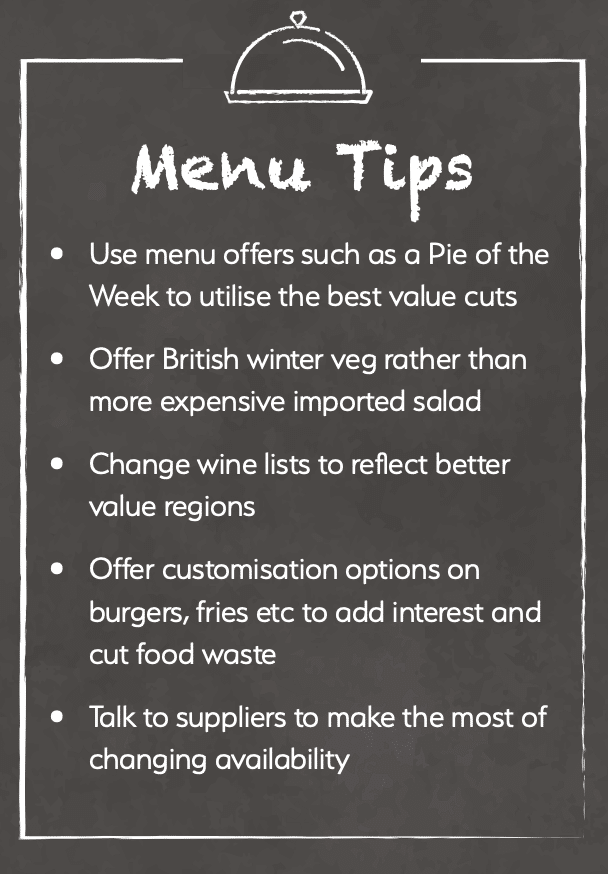
Suppliers can advise on the best produce available for winter menu planning and the good news is that staple comfort food such as pies, casseroles, and sausage and mash can be made using better value cuts and available produce.
Even with an overall fall in the inflation rate, there will inevitably be some products that buck the trend and see higher rates of increase. Operators who can use produce in season – when it is at its best in terms of quality, value and availability – are in the best position to deal with any supply chain disruption.
Budget Update: Operators face higher employee costs through the increase in the Minimum Wage from April 2026, while consumers will see their discretionary spending power reduced by the extension of the freeze on tax thresholds for an additional three years. Increases in alcohol duty rates will mean higher prices for customers. In better news, the freeze in fuel duty to September 2026 will help suppliers to manage transport costs, although food inflation continues to be high. Concessions on business rates have been cautiously welcomed by the hospitality industry, which had campaigned for broader tax concessions.
The Good
- Fuel duty freeze helps manage supply chain costs
- Food inflation should have peaked
- Global markets more stable overall
The Bad
- Consumer spending hit by higher alcohol duty/frozen tax thresholds
- Consumer spend quiet in Jan/Feb
- Winter weather can cause supply chain problems

Menu Watch
More operators are using topped and loaded options to encourage consumers to indulge themselves as well as to customise dishes. Burgers, fries, waffles and dumplings are among the choices that can be pepped up with added toppings.
Dubai chocolate, the global phenomenon of chocolate filled with a crunchy pistachio and pastry mix, is finding its way onto
dessert menus more broadly, as chefs add the distinctive flavour to ice cream, cakes and pastries.
Younger customers in the casual dining and gastropub market are taking more interest in the sustainability of produce, while still looking for interesting flavours. This is encouraging chefs to add a twist to traditional dishes, such as a spiced scotch egg made with British pork, and free-range chicken wings coated with Korean barbecue sauce.
CHRISTMAS
With Christmas food orders tied up by now, operators are focusing on putting menus in place for the challenging early months of 2026. For the record, turkey has been one of the biggest challenges this Christmas, with some suppliers reluctant to quote prices in advance. Beef, another popular festive menu choice, has also seen continued price increases in the run-up to Christmas.
SALADS
The Spanish salad season is now underway and suppliers have generally recovered from the impact of the extremely dry summer weather. The price of imported produce inevitably has to factor in transport costs, making salads a more premium menu option across the winter months.
POTATOES
UK and European harvests have been reasonable, despite concerns about the summer heatwave. There was some impact on potato sizes, but quality and availability are generally good. This should filter through to mean steady pricing and good quality for frozen chips and other processed products.
WINE
The European grape harvest was affected in many regions due to extreme weather. With climate change forecast to impact many of the traditional wine-producing areas, operators may want to refocus their wine lists.
FISH
Supplies of cod and haddock are under severe pressure, with demand significantly ahead of supply, and prices increasing sharply. This situation is expected to continue through the winter. Operators who keep menu descriptions flexible to take advantage of changing availability of a broad range of white fish, such as hake and coley, will be in a stronger position, but prices are expected to be high across the board.
POULTRY
Chicken, a year-round menu staple, has been affected by many of the same factors that have pushed up turkey prices. Whole birds are variable in size, and while chicken portions are generally more available, imports have been unpredictable, affecting price.
FRUIT
British produce such as apples and pears are in good supply after a healthy crop this autumn. Imported citrus fruit is high quality, but prices are up on last year.
BEEF
Lower production in the UK, driven by beef farmers’ concerns about the cost of rearing animals, is keeping beef availability behind market demand. Supplies are tight, and hospitality operators are in competition with retailers, especially on popular cuts such as rib eyes and fillets. The situation is unlikely to ease for at least the first half of 2026.
COFFEE & COCOA
Coffee commodity prices have more than doubled since the start of last year, as major producers such as Brazil and Vietnam struggle with the impact of extreme weather and climate change. With cocoa crops facing similar challenges, the higher prices being asked by suppliers are likely to continue.
COOKING OILS
Globally, oil seed crops have been generally good, but the situation in Ukraine means demand continues to outstrip supply, keeping prices rising. UK supplies are lower as a result of some farmers switching to more profitable crops.
DAIRY
Recent falls in dairy prices are causing challenges for farmers, but mean that prices for products such as milk and cheese are less volatile. However, the cost of winter feeding will keep dairy prices firm.
VEGETABLES
Brassicas such as broccoli and cabbage recovered well from the summer heatwave, with quality and availability good and prices stable. Root vegetables such as carrots, parsnips and swede were more affected, and are generally smaller than usual.
Inflation
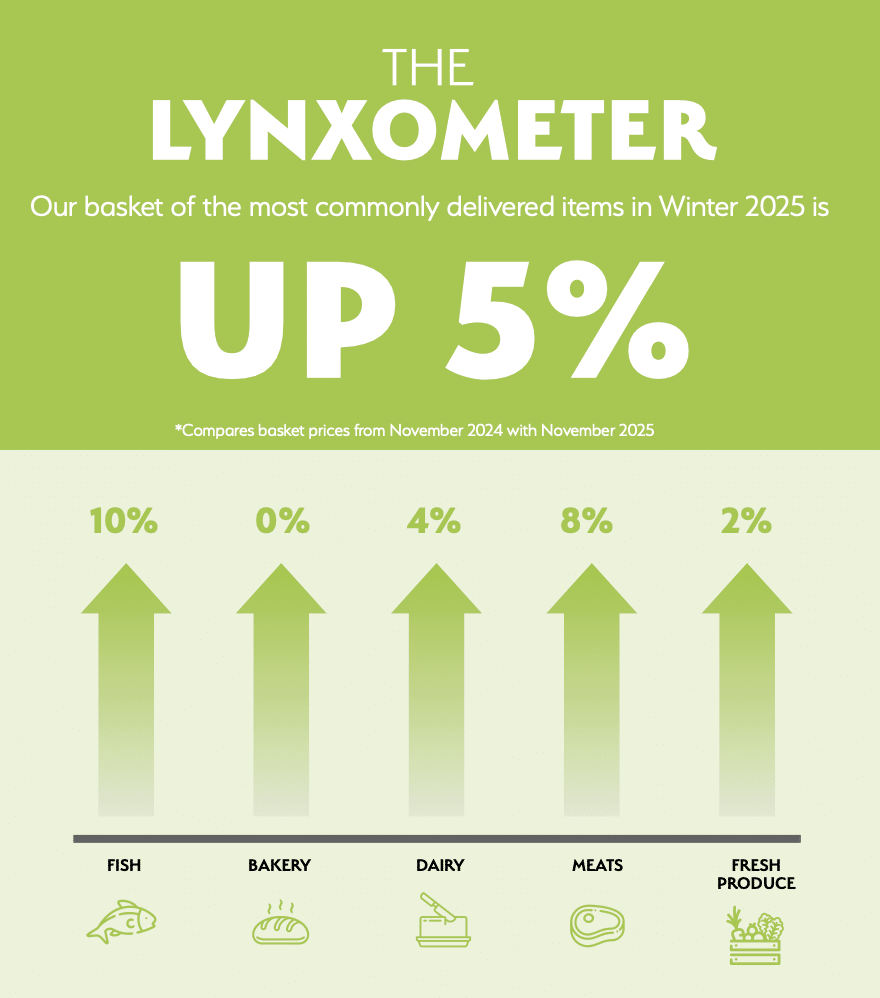
The headline rate of inflation fell to 3.6% in October. However, the rate of food inflation, at 4.9%, is still significantly higher. Beef prices continue to rise sharply, up 27.4% year-on-year, while other produce seeing significant rises include pork up 8.6%, butter up 15.4%, sweets and chocolate up 12.6%, and coffee up 13.6%. Restaurant meals were up 4.9%, as operators have been forced to pass on some cost increases.
Share this Market Forecast
- Seasonality Guide
IN SEASON
- Venison
- Pork
- Coley
- Mussels
- Scallops
- Winter Squash
- Leeks
- Parsnips
- Brussels Sprouts
- Celeriac
- Cabbage
- Kale
- Apples
- Clementines
- Quince
- Pomegranate
- Seasonality Guide
IN SEASON
- Venison
- Pork
- Coley
- Mussels
- Scallops
- Winter Squash
- Leeks
- Parsnips
- Brussels Sprouts
- Celeriac
- Cabbage
- Kale
- Apples
- Clementines
- Quince
- Pomegranate